
Using a Multimeter Safely
8 मिनट
USING A MULTIMETER SAFELY
A digital multimeter can measure voltage, current, resistance, and continuity. The most important habit is to select the correct function and connection before touching the probes to a circuit.
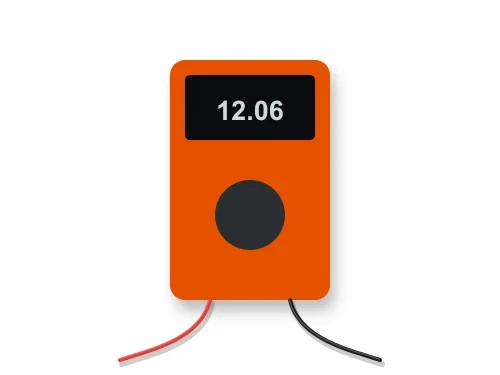
MEASURING VOLTAGE: PARALLEL
Voltage is measured between two points. Keep the circuit powered if appropriate, set the meter to DC volts (V⎓), and place one probe on each side of the component or source. The meter is connected in parallel. Start on a range higher than the expected voltage if the meter is not auto-ranging. Red probe goes to the more positive point; black goes to ground or the negative point. A minus sign means the probes are reversed.
MEASURING CURRENT: SERIES
Current is measured by opening the circuit and inserting the meter so current flows through it. Move the red lead to the current jack only when needed, select the correct A or mA function, and begin on the highest suitable range. Never place a meter set to current directly across a battery or supply: that can short the source and damage the meter. Return the red lead to the voltage jack after measuring current.
MEASURING RESISTANCE AND CONTINUITY
Turn circuit power off and discharge capacitors before measuring resistance. Place probes across the isolated component. The meter sends a small test current. In continuity mode, a beep usually means a low-resistance path, but check the meter manual for its threshold. Do not use resistance or continuity mode on a powered circuit.
A SIMPLE CHECK
To check a 1.5 V battery, set DC volts and place probes across its terminals. A healthy fresh cell should read near its rated voltage, though the exact reading depends on chemistry and load. Do not infer battery health from one unloaded measurement alone.
BEFORE EVERY MEASUREMENT
1. Identify what you are measuring. 2. Check the dial/function. 3. Check the red lead socket. 4. Confirm the voltage and current limits of the meter. 5. Keep fingers behind the probe guards. 6. If unsure, stop and ask an instructor.
COMMON ERRORS
Using the current jack for a voltage measurement can short a source. Measuring resistance with power on can damage the meter or circuit. Selecting AC instead of DC gives misleading readings on a battery-powered project. A blown meter fuse often results from a current measurement made incorrectly.
SAFETY
This lesson is for low-voltage battery circuits only. Do not probe wall outlets, mains wiring, or high-energy equipment. Follow the meter manufacturer’s instructions and your instructor’s rules.