
Series and Parallel Circuits
7 min read
SERIES AND PARALLEL CIRCUITS
Components can be connected in series, in parallel, or in a combination. The arrangement changes how voltage and current are shared. Drawing the connections before wiring helps you predict what a circuit will do.
SERIES: ONE PATH
In a series circuit, components share a single path. The same current passes through each component. The supply voltage is divided across the components, and the individual voltage drops add up to the source voltage. If one component opens the path, current stops everywhere in that loop.
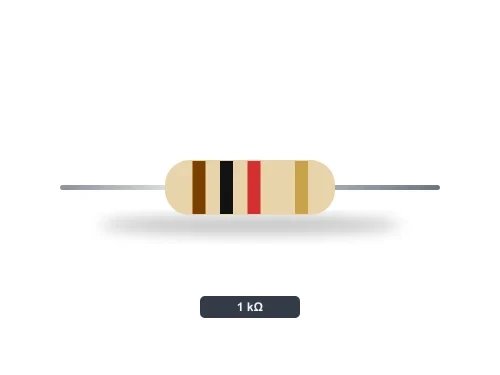
Example: Two equal resistors in series across 6 V share the voltage equally, about 3 V each. Their total resistance is the sum: Rtotal = R1 + R2. Two 1 kΩ resistors make 2 kΩ.Parallel: Branches
In a parallel circuit, components connect across the same two nodes, making separate branches. Each branch has the same voltage as the supply. Current divides among the branches; total current is the sum of branch currents. If one branch opens, other branches can still work.
For two resistors in parallel, the equivalent resistance is lower than either resistor alone. For equal values, two 1 kΩ resistors in parallel equal 500 Ω. This is why a supply can be overloaded when too many low-resistance branches are added.Compare With LEDs
Two LEDs in series share one current path, so the supply must have enough voltage for both LED drops plus the resistor. Two LEDs in parallel should generally have a separate current-limiting resistor in each branch. Small differences between LEDs can otherwise make one branch take more current than another.Try It
Draw a 5 V battery and two 1 kΩ resistors. First place the resistors in series: total resistance is 2 kΩ and current is 5 ÷ 2,000 = 2.5 mA. Then place them in parallel: equivalent resistance is 500 Ω and total current is 5 ÷ 500 = 10 mA. The parallel circuit draws four times the current in this example.Troubleshooting
If a series circuit stops, check the one path for a loose connection. If one parallel branch fails but others still work, inspect that branch. Always disconnect power before changing connections.Safety
Use low-voltage supplies and calculate expected current before connecting a circuit. Do not test these ideas with wall power or by shorting a battery.